Tapestry crochet, graphgan and mosaic crochet all produce blankets with pictures or geometric motifs, and they are often confused in pattern descriptions. They are not the same technique. Choosing the wrong one for your skill level or your design is the main reason colorwork blankets end up unfinished. Here is how the three methods differ, what each one looks like, and which to pick for your next project.
Quick comparison
| Method | How the picture is made | Colors per row | Ends to weave | Best for |
|---|---|---|---|---|
| Tapestry crochet | Single crochet, unused colors carried inside the stitches | 2 to 4 | Few | Geometric motifs, bold animal shapes, bags |
| Graphgan | Single crochet or C2C following a pixel chart, bobbins or carried yarn | Any number | Many | Portraits, detailed pictures, photo-style blankets |
| Mosaic crochet | One color per row, long double crochets dip into rows below | 1 | Very few | Geometric and repeating patterns, texture lovers |
Tapestry crochet
Tapestry crochet is worked in single crochet with the colors you are not using carried along the top of the previous row, so they get wrapped inside each new stitch. The fabric is dense, warm and the same on both sides, which is why the technique is popular for bags and wall art as well as blankets. Because every color travels the whole row, designs with two to four colors work best; with more colors the carried strands make the fabric stiff. Most of the tapestry wall hanging patterns at CrochetPages use this method, with a chart and written rows for every design.
Graphgan
“Graphgan” simply means a blanket made from a graph. The chart is a pixel image, each cell is a stitch, and you can use as many colors as the picture needs. You can work a graphgan in plain single crochet rows, in corner-to-corner (C2C), or even in Tunisian crochet. The trade-off is yarn management: a detailed portrait may need twenty bobbins hanging from one row. The reward is that any image can become a blanket, from a cat maze to a stained glass window. Our blanket and graphgan patterns are all charted for single crochet, which keeps the picture crisp and the fabric flat.
Mosaic crochet
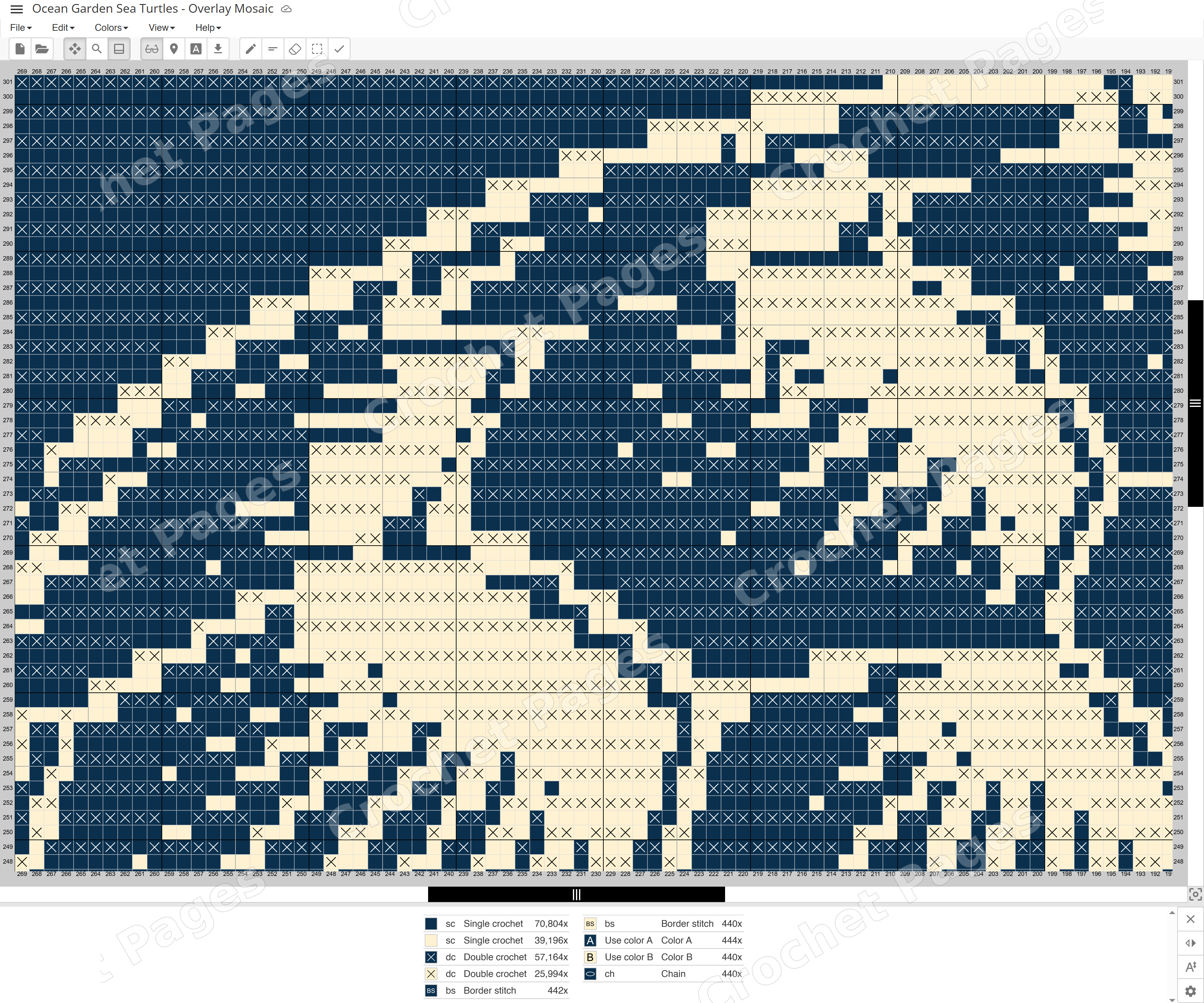
Mosaic crochet looks complicated but uses only one color per row. You alternate two colors every row (or every two rows in the overlay method) and create the design with long double crochets that reach down into the row below, covering the stitches of the other color. There are no color changes mid-row and almost no ends. The result is a strongly textured, graphic fabric with a slightly raised pattern. Mosaic is the most relaxing of the three to crochet once you understand the chart symbols, and the mosaic crochet patterns in our shop include a stitch key and a row-by-row written version for that reason.
Which should a beginner choose?
- Never done colorwork: start with a two-color tapestry wall hanging. You learn clean color changes on a small piece.
- Comfortable with single crochet and patient: pick a graphgan with 4 to 6 colors and large shapes, such as a holiday or animal silhouette design.
- Dislike weaving in ends: mosaic crochet. Two balls of yarn, one color per row, and a fabric that looks far harder than it is.
Yarn and hook notes
All three methods look best in a smooth, plied yarn with good stitch definition, such as a worsted weight cotton blend or an acrylic with a tight twist. Fuzzy or variegated yarn blurs the picture. Tapestry and graphgan fabrics are dense, so go up half a hook size if your swatch feels like cardboard. Mosaic needs a slightly looser tension so the long stitches lie flat. For a longer guide see our post on choosing yarn for amigurumi and colorwork blankets.
Can one chart be used for all three?
Tapestry and graphgan charts are interchangeable: both are pixel grids read bottom to top, and our guide on how to read a graphgan chart applies to both. Mosaic charts are different, because the symbols tell you which stitches are single crochets and which are long double crochets into the row below. Do not try to work a mosaic chart in tapestry or the picture will not appear. When you shop, check the technique named in the product title; at CrochetPages every listing states whether it is single crochet tapestry, graphgan or mosaic.