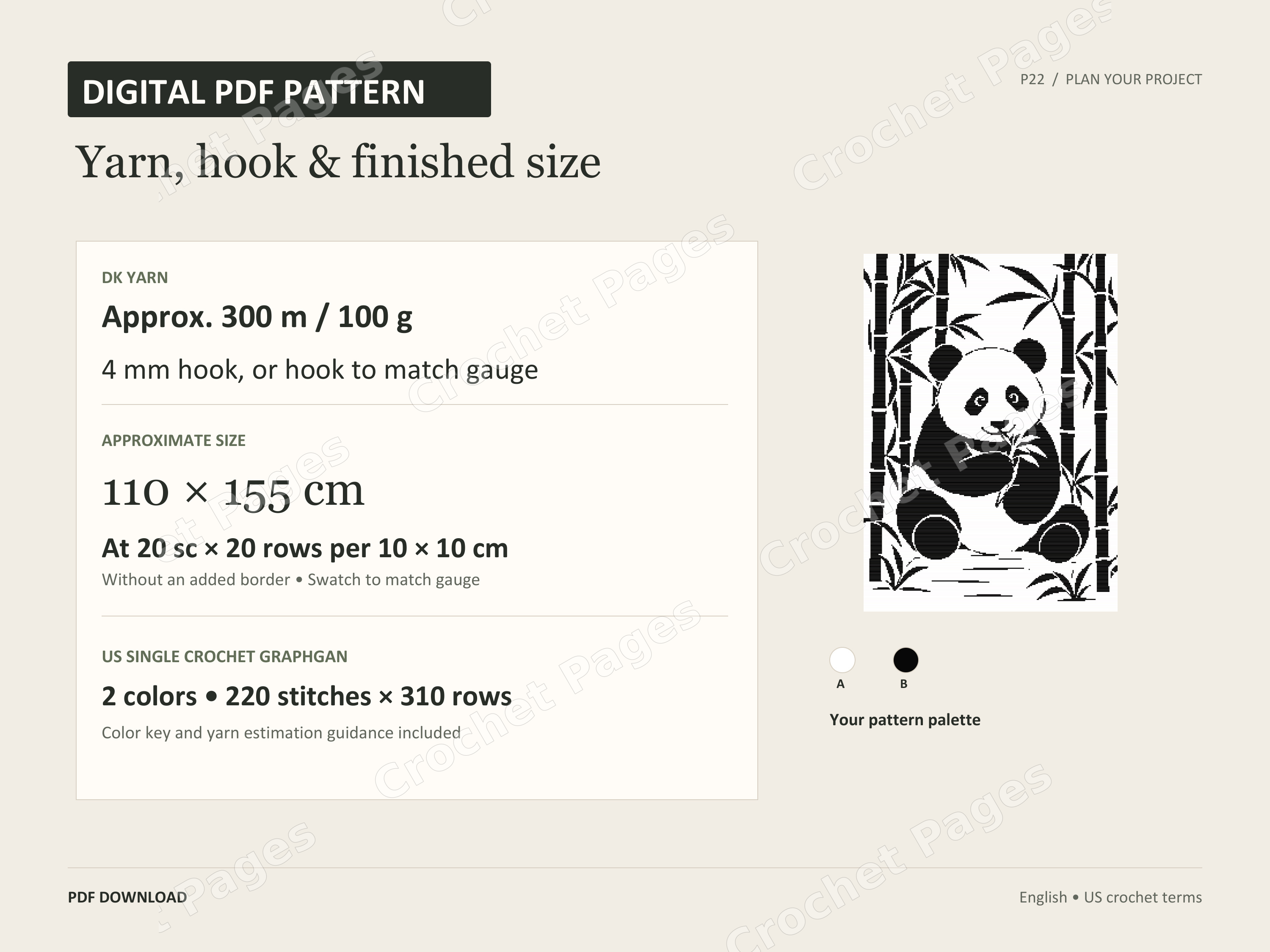
The same pattern can look crisp or blurry depending on the yarn you choose. Amigurumi need a yarn that hides stuffing and keeps its shape; tapestry and graphgan blankets need a yarn that shows clean color edges and does not pill. This guide explains what to look for on the label, which fibers suit which project, and how to substitute when you cannot find the yarn a pattern names.
Read the label: weight, ply and twist
- Weight is the thickness: DK (3) and worsted (4) are the standard choices for both toys and blankets. Fingering yarn gives tiny, detailed amigurumi; bulky yarn gives fast, cuddly blankets with less detail.
- Ply is how many strands are twisted together. A 4-ply or 8-ply yarn with a round cross-section gives better stitch definition than a single-ply roving yarn, which splits and fuzzes.
- Twist: a firm twist resists splitting on the hook and keeps colorwork edges sharp. Loosely twisted yarn is softer but blurs the picture.
Best yarn for amigurumi
Amigurumi are worked tightly, often with a hook one or two sizes smaller than the label suggests, so the yarn must tolerate tension without going stiff or splitting.
- Cotton (mercerized or matte): the classic choice. Crisp stitches, clear shaping, does not stretch over time. Slightly firm, so toys feel sturdy rather than squishy.
- Cotton-acrylic blends: softer than pure cotton, still show stitches well, machine washable. A good default if the toy is for a child.
- Premium acrylic: inexpensive, huge color range, soft. Choose a smooth, tightly plied one; cheap fluffy acrylic hides stitches and pills quickly.
- Velvet or chenille: very soft and popular for plush toys, but it hides your stitches completely and can “worm” out of the fabric. Not for beginners, and not for patterns with fine shaping.
For the amigurumi patterns at CrochetPages, a smooth DK cotton blend with a 2.5 to 3 mm hook reproduces the sample photos most closely. Patterns that mention a fuzzy mane, hair or fur use a small amount of eyelash or mohair-style yarn for those parts only.
Best yarn for tapestry and graphgan blankets
A charted blanket uses a lot of yarn, is washed often, and lives or dies on color contrast. Priorities, in order: stitch definition, pill resistance, matching dye lots, price.
- Worsted weight acrylic from one line: the most common choice for graphgans. Affordable in the 8 to 20 skeins a blanket needs, machine washable, and most lines offer the 10 to 30 solid shades a picture blanket requires. Pick a smooth, not fluffy, one.
- Cotton-acrylic blends: heavier and cooler, with sharper edges. Good for wall hangings and warm climates.
- Superwash wool blends: beautiful drape and warmth, but costly at blanket quantities and some shades bleed on the first wash.
Avoid variegated, speckled or heathered yarns for any color that forms an outline or a face. They break up the shapes. Use them, if at all, only for large background areas. Every chart in our blanket and graphgan collection includes a stitch count per color so you can calculate yarn before you buy.
How much yarn does a graphgan need?
A rough rule for worsted weight single crochet: 1 stitch uses about 0.6 to 0.7 inches of yarn, so 1,000 stitches use roughly 55 to 60 yards. Multiply each color’s stitch count from the chart key by 0.06 to get yards, then add 15 percent for carried yarn and ends. A 150 × 200 chart (30,000 stitches) needs around 1,900 yards in total, about 10 to 12 skeins of 170 yards.
Substituting yarn safely
- Match the weight category and the yards-per-gram, not just the label name.
- Match the fiber family: cotton for cotton, acrylic for acrylic. Fiber affects stiffness and drape more than brand does.
- Swatch 20 stitches by 20 rows with your hook and compare to the pattern gauge. Change hook size, not tension, to match.
- Buy all skeins of one color from the same dye lot. Blanket backgrounds show lot differences as faint stripes.
Hook pairing cheat sheet
| Project | Yarn weight | Hook |
|---|---|---|
| Small amigurumi, keychains | Fingering or sport | 2.0 to 2.5 mm |
| Standard amigurumi | DK | 2.5 to 3.0 mm |
| Large plush amigurumi | Worsted | 3.5 to 4.0 mm |
| Tapestry wall hanging | Worsted cotton | 3.5 to 4.0 mm |
| Graphgan blanket | Worsted acrylic | 4.0 to 5.0 mm |
| Mosaic blanket | Worsted or aran | 4.5 to 5.5 mm |
Still deciding between techniques? Our comparison of tapestry, graphgan and mosaic crochet explains which one suits your yarn and your patience, and the pattern guide shows what to check in a PDF before you buy.